
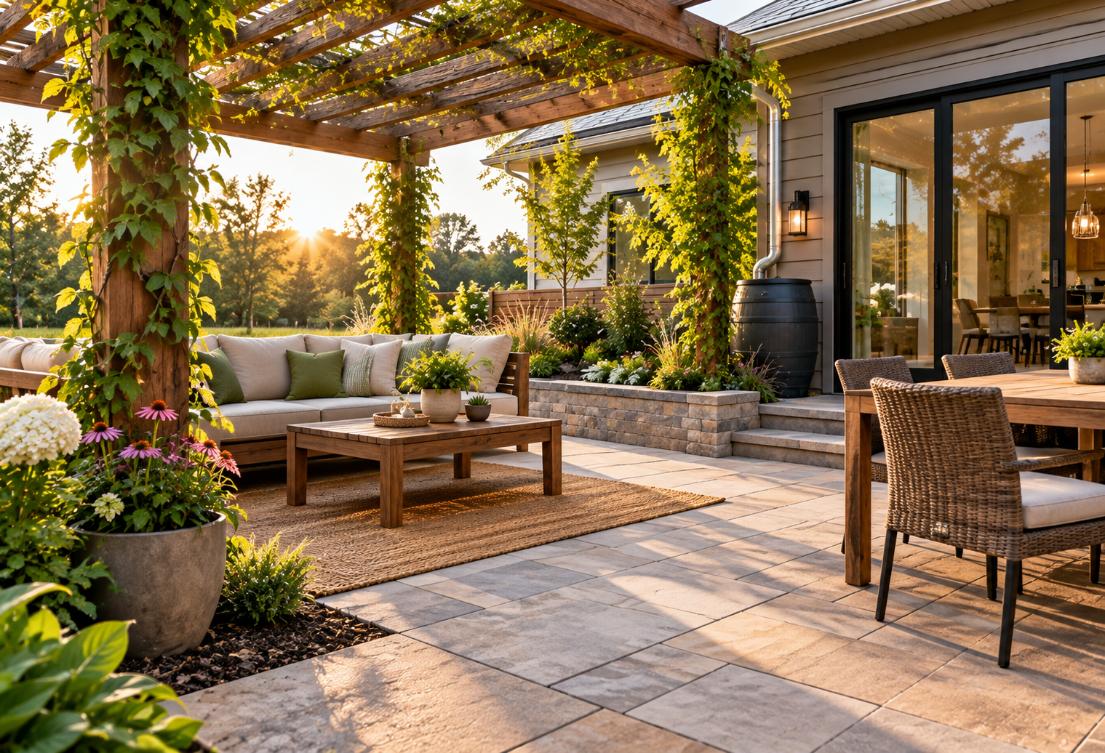
Sustainable Patio Solutions: Eco-Friendly Options for Austinburg Homes
A patio should be a comfortable place to enjoy your backyard without creating unnecessary maintenance, drainage problems, or environmental waste. For homeowners in Austinburg, Ohio, changing seasons, frequent moisture, and winter freezing can make choosing sustainable patio materials especially important. The right eco-friendly patio solutions can help protect your outdoor space while reducing long-term maintenance and unnecessary material replacement.
Sustainable patio solutions for Austinburg homes include permeable pavers, recycled building materials, responsibly sourced wood, and durable natural stone. These options can reduce stormwater runoff, extend the life of outdoor surfaces, and limit waste from frequent repairs. Choosing materials suited to Ashtabula County’s seasonal weather is essential for creating an environmentally responsible patio that remains functional year after year.
What Austinburg Homeowners Should Know
-
Permeable patio surfaces allow rainwater to move through properly designed joints and base layers, helping reduce surface runoff.
-
Recycled and reclaimed materials can reduce demand for newly manufactured building products while adding character to outdoor spaces.
-
Freeze-thaw resistance is especially important in Ashtabula County, where winter temperatures can damage poorly installed patio surfaces.
-
Proper drainage helps protect patios and nearby foundations during Northeast Ohio’s rainy seasons and snowmelt.
-
Regular maintenance can extend the lifespan of existing patios, reducing unnecessary demolition and replacement.
For local homeowners, sustainability means more than selecting environmentally friendly products. It also means creating outdoor spaces that withstand regional weather, manage moisture effectively, and require fewer repairs over time.
At Ron’s Repair, we understand that practical outdoor improvements should balance durability, maintenance, and environmental responsibility. Thoughtful material selection and proper installation planning can help homeowners make better long-term decisions.
Local Data and Field Observations: Why Sustainable Patios Matter in Austinburg
Sustainable patio design in Austinburg should account for Northeast Ohio’s rainfall, seasonal snow, freezing temperatures, and changing soil moisture. These conditions influence how outdoor surfaces drain, settle, and deteriorate, making proper base preparation and weather-resistant materials essential to long-term performance.
Austinburg Township sits within Ashtabula County, where outdoor structures experience significant seasonal temperature changes. Winter freezing and spring thawing can cause moisture trapped beneath patio surfaces to expand and shift surrounding materials.
Several regional conditions deserve attention:
-
Winter freezing: Water entering joints and cracks can expand during freezing conditions.
-
Spring snowmelt: Saturated soil may contribute to movement beneath poorly prepared patios.
-
Summer rainfall: Heavy downpours can create pooling when patio surfaces lack adequate drainage.
-
Autumn debris: Fallen leaves can clog drainage openings and retain moisture against patio materials.
Properties near wooded areas or low-lying sections of the county may face additional challenges from shade, moisture retention, and organic debris.
These are regional maintenance considerations rather than findings from a specific property inspection. Actual patio conditions depend on grading, soil, drainage, construction quality, and exposure.
How Eco-Friendly Patio Materials Benefit Local Homes
Eco-friendly patio materials benefit Austinburg homeowners by reducing unnecessary waste, supporting better water management, and potentially lowering long-term maintenance needs. The most sustainable choice is generally a durable material that suits the property’s conditions and can be repaired without replacing the entire patio.
Permeable Pavers
Permeable pavers allow water to pass through joints into a specially prepared aggregate base. When site conditions permit, this system can help reduce surface runoff and standing water.
These systems require proper installation and periodic maintenance to prevent sediment from restricting drainage.
Reclaimed Brick and Stone
Reclaimed brick and natural stone can provide a distinctive appearance while reducing demand for new materials.
However, reclaimed products should be inspected for structural integrity and suitability for outdoor freeze-thaw exposure before installation.
Recycled Composite Materials
Some patio and decking products incorporate recycled plastics or wood fibers. These materials can reduce demand for virgin raw materials and may require less routine finishing than traditional wood.
Homeowners should compare product composition, durability, heat retention, and manufacturer maintenance recommendations.
Responsibly Sourced Wood
Wood can be a renewable patio or deck material when responsibly sourced and properly maintained.
Naturally durable species and appropriately treated products can offer good performance, but moisture exposure and maintenance requirements should influence the final selection.
Warning Signs Your Patio Needs Sustainable Improvements
An existing patio may benefit from repair, drainage improvements, or material replacement when deterioration begins affecting safety or functionality. Identifying these problems early can help Austinburg homeowners preserve usable materials and avoid more extensive reconstruction.
Watch for these seven warning signs:
-
Standing water: Puddles remain on the patio long after rainfall.
-
Uneven pavers: Individual sections have shifted, creating trip hazards.
-
Recurring cracks: Concrete or masonry develops new cracks after winter.
-
Loose stones: Patio materials move under normal foot traffic.
-
Persistent moss growth: Shaded surfaces remain damp for extended periods.
-
Eroding joints: Sand or joint material repeatedly washes away.
-
Water near the foundation: Patio drainage directs runoff toward the home.
Not every warning sign requires complete replacement. Localized repairs, improved grading, or joint maintenance may restore performance while preserving existing materials.
When to Call a Professional for Patio Repairs
Professional patio repair becomes appropriate when drainage problems, significant surface movement, structural deterioration, or recurring damage cannot be resolved through routine maintenance. In Austinburg, repeated freeze-thaw cycles can make underlying installation problems more noticeable after winter.
Homeowners can safely remove leaves, monitor surface drainage, and inspect accessible joints.
However, professional evaluation is advisable when patio sections sink, create significant trip hazards, or direct water toward the foundation.
Repairs involving major excavation, structural supports, or complicated drainage changes should not be approached as simple weekend projects.
Common Causes of Patio Damage in Ashtabula County
The most common patio problems in Ashtabula County often involve inadequate drainage, insufficient base preparation, seasonal ground movement, and material deterioration. These conditions can shorten a patio’s useful life even when the original materials appear durable.
1. Poor Drainage
Water that collects beneath patio surfaces can weaken supporting materials and contribute to settlement.
2. Freeze-Thaw Movement
Moisture trapped in cracks or beneath pavers can expand during freezing temperatures, causing gradual movement and deterioration.
3. Inadequate Base Preparation
An improperly compacted or insufficiently designed base may allow patio surfaces to shift under normal use.
4. Aging Materials
Older concrete, brick, and wood surfaces can deteriorate through years of weather exposure.
5. Tree Roots and Vegetation
Growing roots can displace patio materials, while nearby vegetation may contribute to moisture retention.
Addressing these underlying causes is often more sustainable than repeatedly repairing visible surface damage.
Preventive Maintenance for Sustainable Patios
Sustainable patio maintenance in Austinburg should focus on seasonal cleaning, drainage inspections, minor repairs, and protecting existing materials from unnecessary deterioration. A consistent maintenance routine can help homeowners avoid premature replacement while keeping outdoor spaces comfortable and safe.
Spring
Inspect patio surfaces after winter for cracks, settlement, and displaced joints. Remove accumulated debris and check drainage paths during rainfall.
Summer
Clean surfaces using methods appropriate for the material. Avoid unnecessary harsh chemicals and monitor areas where weeds or moss are developing.
Fall
Clear leaves from joints, drains, and nearby gutters. Address obvious drainage problems before freezing weather begins.
Winter
Use deicing products only when approved for the patio material. Avoid aggressive ice removal that could chip pavers, stone, or concrete.
For homeowners near Geneva, Jefferson, and surrounding communities, this seasonal approach helps account for Northeast Ohio’s changing outdoor conditions.
Expected Results From Sustainable Patio Improvements
Sustainable patio improvements can provide better drainage, safer walking surfaces, reduced maintenance demands, and longer material service life when the design matches the property. Results depend on the existing patio condition, material selection, installation quality, and ongoing care.
A properly designed permeable patio may reduce runoff, but performance depends on soil conditions, drainage design, and regular cleaning.
Repairing reusable pavers can preserve materials and reduce demolition waste. Replacing severely deteriorated surfaces with durable products may provide a better long-term outcome than repeated temporary repairs.
No patio material is completely maintenance-free, and environmentally responsible improvements should be evaluated over their expected service life.
Common Mistakes When Choosing Eco-Friendly Patio Materials
Common sustainable patio mistakes include choosing products based only on environmental claims, overlooking drainage, and replacing materials that could reasonably be repaired. Avoiding these mistakes helps local homeowners make improvements that are both practical and resource-conscious.
| Mistake | Consequence | Better approach |
|---|---|---|
| Choosing materials based only on recycled content | Materials may not withstand local weather | Compare durability, composition, and freeze-thaw suitability |
| Ignoring drainage | Water can collect near the patio or foundation | Evaluate grading and runoff before installation |
| Installing pavers over an inadequate base | Settlement and uneven surfaces may develop | Prepare and compact the base appropriately |
| Replacing an entire patio unnecessarily | Usable materials become waste | Evaluate repair and selective replacement first |
| Using unsuitable cleaning products | Surface damage or unwanted chemical runoff | Follow material-specific cleaning guidance |
Common Local Scenario: An Aging Backyard Patio
A common patio scenario in Austinburg involves an older paver surface that becomes uneven after several winters. Some sections settle, water begins collecting near the edges, and weeds grow between joints.
Replacing every paver may seem like the simplest solution, but it is not always necessary.
If the existing materials remain sound, lifting affected sections, correcting the underlying base, and reinstalling reusable pavers may provide a more sustainable option.
Where drainage problems are extensive or materials have deteriorated significantly, a redesigned patio may offer better long-term performance.
The appropriate solution depends on an assessment of the actual conditions.
Related Patio Repair and Improvement Solutions
Patio repair and improvement solutions can support sustainability by correcting drainage problems, restoring damaged surfaces, and preserving materials that remain functional. Austinburg homeowners should evaluate the cause of deterioration before deciding whether localized repair or full replacement offers the better long-term value.
Depending on the property’s needs, potential solutions include paver resetting, joint repairs, surface restoration, drainage corrections, and selective material replacement.
When evaluating a patio project, consider whether existing materials can be reused and whether the proposed improvement addresses the underlying cause of damage.
Comparing Sustainable Patio Options
The best sustainable patio option depends on the condition of the existing surface, available budget, drainage requirements, and desired appearance. Homeowners in Northeast Ohio should compare total service life and maintenance needs rather than focusing exclusively on initial material costs.
| Option | Main advantage | Key consideration |
|---|---|---|
| Repair existing patio | Preserves usable materials and reduces waste | Underlying problems must be corrected |
| Permeable pavers | Helps manage stormwater runoff | Requires suitable site conditions and base design |
| Reclaimed stone or brick | Reduces demand for new materials | Must be suitable for outdoor weather exposure |
| Recycled composite | May reduce routine finishing needs | Performance varies by product |
| Durable natural stone | Can provide a long service life | Material sourcing and installation costs vary |
For many properties, repairing an otherwise sound patio may be the most resource-efficient starting point.
Sustainable Patio Considerations for Austinburg and Nearby Communities
Sustainable patio planning in Austinburg should reflect the property’s drainage, exposure, and seasonal maintenance requirements. Similar considerations apply to homeowners in nearby Geneva, Jefferson, Saybrook Township, and other Ashtabula County communities.
Properties closer to Lake Erie may experience different wind, moisture, and winter weather exposure than more sheltered inland locations, making site-specific planning especially useful.
The Cost of Ignoring Patio Problems
Ignoring patio deterioration can lead to larger repairs, additional material waste, and potentially unsafe walking surfaces. In Northeast Ohio, unresolved drainage problems may become more difficult to manage as repeated freezing and thawing contribute to further surface movement.
Small areas of settlement can expand when supporting materials continue to wash away. Water directed toward a foundation may also create concerns beyond the patio itself.
Addressing problems early can preserve existing materials and reduce the likelihood of unnecessary replacement.
Frequently Asked Questions About Sustainable Patios in Austinburg
1. What is the most eco-friendly patio material for Austinburg homes?
The most eco-friendly patio material is often one that combines durability, responsible sourcing, and a long service life. Reclaimed stone, reusable pavers, and properly designed permeable surfaces are worth considering. For Austinburg homes, resistance to moisture and winter weather should be part of the selection process.
2. Are permeable pavers suitable for Ohio winters?
Yes, permeable pavers can perform well in Ohio winters when the entire system is properly designed and installed. The base, drainage characteristics, and paver specifications are important. In Ashtabula County, homeowners should also consider freeze-thaw exposure and whether the site’s soil conditions support effective infiltration.
3. Can an existing concrete patio be made more sustainable?
Yes, maintaining or repairing an existing concrete patio can be more sustainable than replacing it unnecessarily. Localized crack repairs, appropriate surface maintenance, and drainage improvements may extend its useful life. However, significant settlement or structural deterioration may require more extensive corrective work.
4. How does Austinburg’s weather affect patio lifespan?
Austinburg’s seasonal weather affects patio lifespan through moisture exposure, freezing temperatures, snowmelt, and changing soil conditions. Water entering cracks or poorly drained base materials can contribute to movement and deterioration. Proper installation, drainage, and seasonal maintenance help reduce these risks, although no material is immune to weathering.
5. Do sustainable patios require less maintenance?
Some sustainable patio materials require less maintenance, but the amount varies by material and installation. Recycled composites may need less finishing than traditional wood, while permeable pavers require attention to joint cleanliness. Homeowners should compare maintenance over the full expected service life rather than assume every eco-friendly product is low-maintenance.
6. Should I repair or replace my patio in Ashtabula County?
Repair is often worth considering when most patio materials remain structurally sound and damage is limited to specific areas. Replacement may be more appropriate when widespread deterioration, inadequate construction, or major drainage problems exist. An assessment of the base and surface condition helps determine the more practical option.
7. Can a sustainable patio help reduce stormwater runoff?
Yes, a properly designed permeable patio can help reduce surface runoff by allowing water to enter an engineered aggregate base. Its effectiveness depends on infiltration conditions, maintenance, and overall drainage design. Austinburg homeowners should also ensure that water is not being redirected toward foundations or neighboring properties.
8. Are permits required for patio improvements in Austinburg?
Permit requirements depend on the project’s scope, location, and construction details. A simple ground-level patio may have different requirements than an elevated structure, retaining wall, or project involving significant grading. Homeowners should confirm applicable requirements with Austinburg Township or the appropriate Ashtabula County authority before beginning work.
Create a More Sustainable Outdoor Space for Your Austinburg Home
An eco-friendly patio should provide lasting comfort while making responsible use of materials and resources. By prioritizing drainage, durability, thoughtful repairs, and seasonal maintenance, homeowners can create outdoor spaces that better withstand Northeast Ohio’s weather.
At Ron’s Repair, we believe practical improvements begin with understanding the property’s needs and choosing solutions that make sense for the long term.
Protect Your Austinburg Patio With Smarter, More Sustainable Improvements
Whether your patio needs attention or you are exploring environmentally responsible outdoor upgrades, understanding your options is the first step toward a durable, functional space.
Categorised in: Decking
